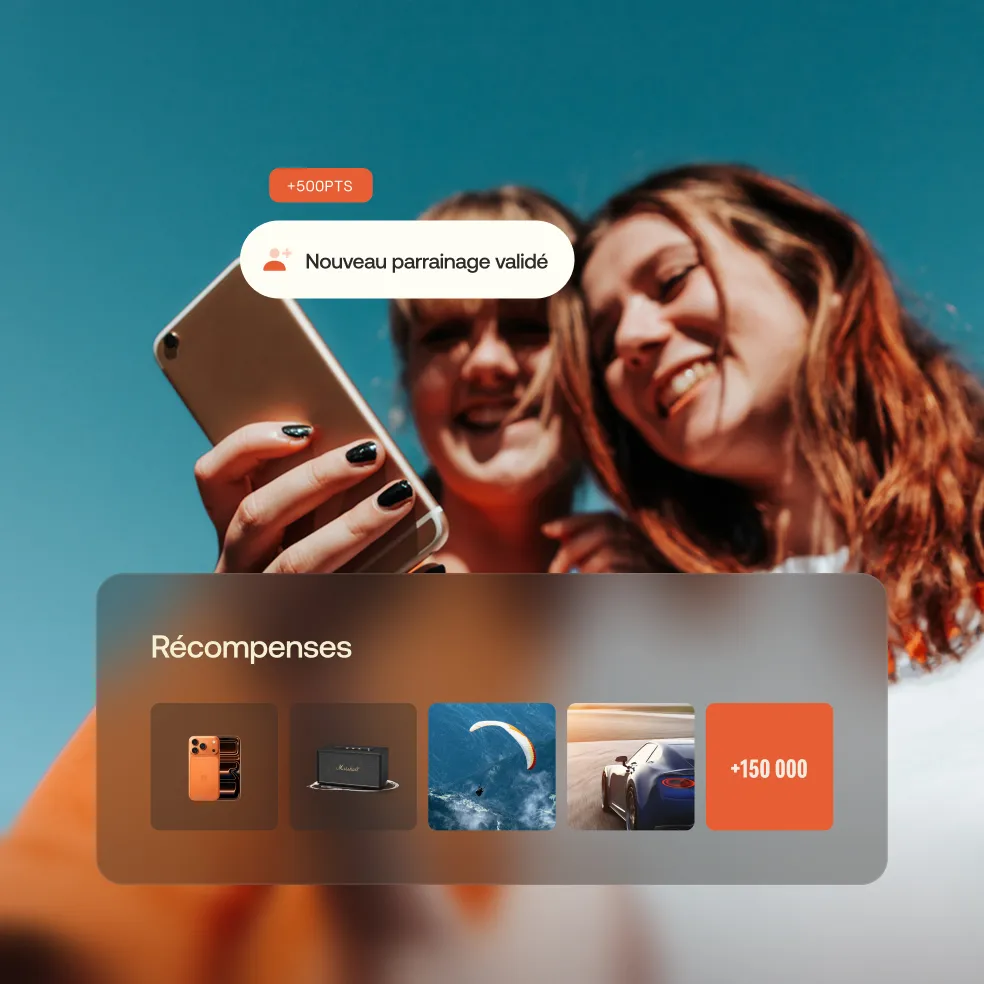
When integrated into a structured activation strategy, client gifting becomes a powerful lever for loyalty, engagement, and growth.
In a context where:
- acquisition costs are rising,
- sales cycles are lengthening,
- customer loyalty is becoming more volatile,
- competitive pressure is intensifying,
every interaction must contribute to overall performance.
A client gift should never be neutral.
It must support a clear business objective.
The real question is therefore not:
“What gift should we give?”
But:
“What measurable result do we want to achieve with this gift?”
Why is client gifting still a strategic lever in 2026?
Contrary to popular belief, client gifting is not a relic of traditional relationship marketing. When used correctly, it directly impacts several key performance indicators.
1. A Customer Lifetime Value accelerator
In both B2B and B2C environments, profitability increasingly relies on Customer Lifetime Value (LTV). Retaining customers is cheaper than acquiring new ones. Yet, investments are often concentrated on prospecting.
A well-integrated client gift can:
- strengthen brand loyalty,
- increase purchase frequency,
- drive repeat purchases,
- reduce churn.
Companies see up to a 306% increase in Customer Lifetime Value among clients who report a strong emotional connection to the brand (source: Motista).
.webp)
In this context, the gift acts as a relationship catalyst—provided it is relevant and contextualized.
2. A sales acceleration tool
During negotiation or closing phases, a strategy that includes a reward can:
- encourage decision-making,
- shorten lead times,
- boost adoption of a specific offer.
For example:
- activation campaigns to boost a strategic product line,
- incentives tied to purchase volume,
- rewards contingent upon meeting a goal.
The gift then becomes a behavioral trigger, rather than just a nice gesture.
3. A lever for reactivating dormant accounts
Reactivation is often less expensive than acquisition. Yet, it remains underutilized.
A gift integrated into a targeted campaign can:
- recapture attention,
- create a new opportunity for engagement,
- re-engage an inactive client without direct sales pressure.
Rather than a standard follow-up, a gift creates a unique touchpoint.
4. A tool for differentiation in saturated markets
In many sectors (manufacturing, retail, automotive, B2B services), product offerings are homogeneous. Price gaps are narrowing. Technical arguments are converging.
What makes the difference:
- the quality of the relationship,
- the attention paid to partners,
- the ability to create a sense of appreciation.
When structured as part of an activation strategy, client gifting becomes a distinctive element of the overall brand experience.
The problem with the “isolated” client gift
Despite its potential, client gifting is still too often managed tactically rather than strategically.
An ad-hoc, unmanaged approach
In many organizations, the pattern is as follows:
- budget allocated at the end of the year,
- quick selection of a promotional item,
- mass distribution,
- no impact measurement.
The result:
✔ A nice gesture
✖ No correlation with sales performance
✖ No segmentation
✖ No ROI tracking
✖ Difficulty justifying the budget
In this case, the gift is a relationship expense.
It never becomes a measurable investment.
The lack of a clear business objective
An effective client gift must answer a simple question:
- Do you want to increase purchase frequency?
- Reward network performance?
- Boost a product launch?
- Re-engage a specific segment?
- Strengthen loyalty within a strategic portfolio?
Without a defined objective, it is impossible:
- to calibrate the budget,
- to choose the right type of reward,
- to measure the impact,
- to optimize future campaigns.
The lack of management and data
Modern marketing is data-driven.
Yet, most client gifting operations:
- are not tracked,
- are not integrated into CRM tools,
- do not allow for post-campaign behavior analysis.
Without metrics such as:
- participation rate,
- activation rate,
- post-reward conversion,
- average basket growth,
- repurchase rate,
it becomes difficult to allocate budgets effectively.
Shifting from a product-focused to an activation-focused approach
The real evolution is not the nature of the gift (physical or otherwise).
It is its integration into a structured marketing framework.
An isolated gift creates an emotional spike.
A gift integrated into a strategy creates a business impact.
The difference lies in:
- segmentation,
- measurable objectives,
- the behavioral trigger,
- performance tracking,
- the scalability of the system.
This is the precise moment when a client gift moves from being a symbolic gesture to a strategic activation tool.
Moving from client gifting to an activation strategy
The difference between a one-off gift and a performance driver comes down to one word: activation.
Activating a client gift means integrating it into a mechanism designed to drive a specific behavior.
A gift becomes strategic when it is:
- linked to a clear objective,
- triggered by a measurable action,
- integrated into a customer journey,
- tracked via performance indicators.
1. Define the business objective before the gift
Before choosing the reward, you must define the expected result.
A few examples of objectives:
- Increase purchase frequency in a B2B segment
- Accelerate the clearance of strategic stock
- Stimulate the adoption of a new product line
- Reactivate customers who have been inactive for 6 months
- Reward the performance of a reseller network
- Increase the average basket value over a given period
The gift is no longer an end in itself.
It becomes a driver for action.
2. Integrate the gift into a structured program
An effective activation program generally relies on:
- A defined target (CRM segmentation)
- Clear mechanics (challenge, points, tiers, games, conditional rewards)
- A limited duration (sense of urgency)
- Dedicated communication
- Real-time tracking
Examples of activation mechanics:
🔹 Sales challenge
Reward conditional on a purchase volume or a target achieved.
🔹 Tiered program
The more the customer progresses, the greater the reward.
🔹 Post-purchase activation
Gift triggered after a specific action (order, renewal, upsell).
🔹 Reactivation campaign
Reward associated with re-engagement or a new purchase.
In each of these cases, the gift becomes a behavioral accelerator.
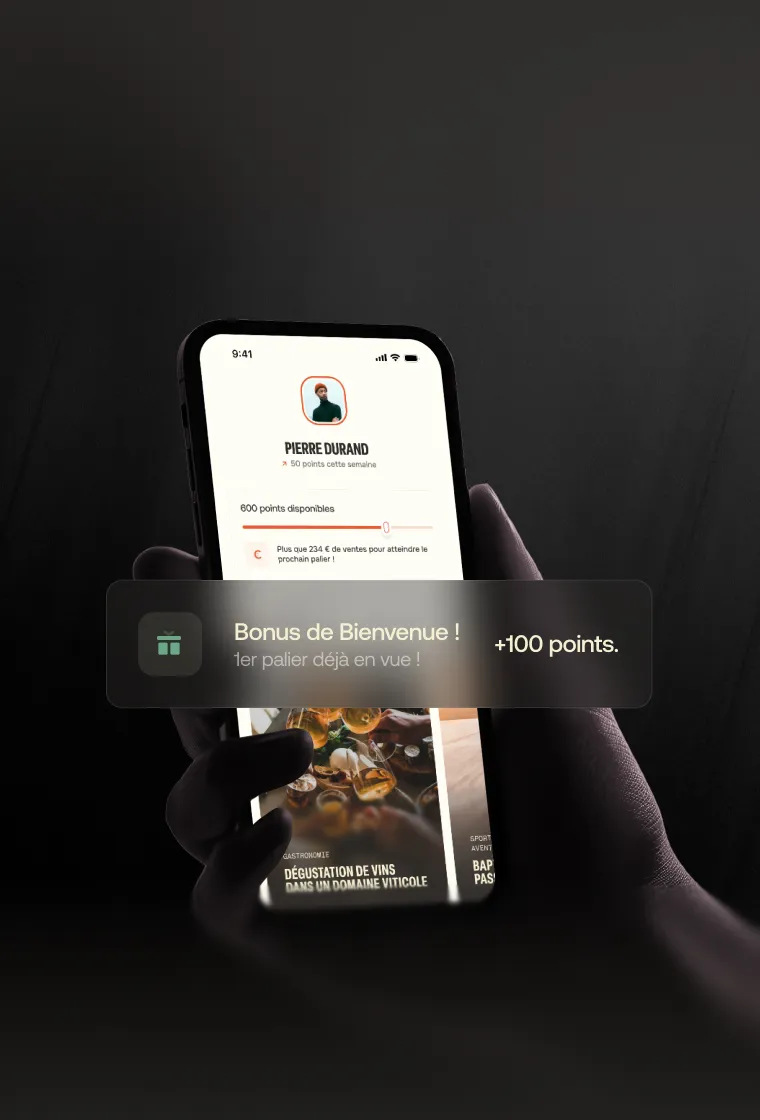
3. Measuring and optimizing performance
An effective activation strategy allows you to track:
- Participation rate
- Goal achievement rate
- Revenue growth over the period
- Comparison with a control period
- Post-campaign repurchase rate
- Overall ROI
This is where the client gift takes on its full strategic dimension:
it can be evaluated, optimized, replicated, or adjusted.
4. Turning a one-off action into a recurring lever
The most mature companies do not settle for isolated operations.
They structure:
- annual programs,
- quarterly activations,
- recurring network incentives,
- thematic campaigns.
Client gifting thus becomes a tool integrated into your overall commercial strategy.
Which types of client gifts align with your objectives?
The question is no longer “which gift is the most original?”
But rather, “which type of reward is most effective for achieving the set goal?”
Promotional gifts: visibility and volume
Promotional items (swag, branded products) are suitable for:
- event-based operations,
- trade shows,
- large-scale distribution campaigns,
- brand awareness campaigns.
They are effective in terms of volume, but rarely sufficient for targeted performance goals.
Personalized gifts: strategic relationships
For key accounts or strategic partners, personalization enhances perceived value.
These gifts are suitable for:
- long-term relationships,
- VIP clients,
- premium collaborations.
They strengthen the relationship, but remain difficult to scale without a structured tool.
Choice-based rewards: performance and scalability
Systems that allow the recipient to choose their own reward (goods or services) offer several strategic advantages:
- Increased satisfaction rates
- Reduced risk of mismatch
- Adaptability to different profiles
- National or European scalability
- Precise budget management
This model is particularly relevant for:
- distributor networks,
- sales teams,
- B2B programs,
- multi-site operations,
- large-scale activation campaigns.

The deciding factor: objective/reward alignment
An effective gift must meet three criteria:
- Consistency with business objectives
- Relevance to the target audience
- Ability to be tracked and measured
It is not the nature of the gift that determines its performance.
It is its integration into an actionable strategy.
Case study: how Prolians drove online purchasing through a rewards program
In the professional supply sector, changing purchasing habits is a major strategic challenge.
Transitioning B2B customers from in-store counters to online purchasing cannot be forced.
It requires more than just an e-commerce push.
You need to create a trigger.
That is the bet made by Prolians, a major player in the distribution of tools and supplies for professionals.
The challenge
- A large base of active in-store customers
- A strong need to develop the e-commerce channel
- A need to accelerate digital adoption without compromising the commercial relationship
The goal was not just to generate traffic, but to create a new, lasting behavior.
The mechanism: “3 months to win”
The strategy designed was intentionally simple and clear:
Objective:
Make at least €150 in online purchases for three consecutive months.
Incentive:
Unlock a personalized reward for the first 150 participants to reach the goal.
Clear messaging.
Measurable criteria.
Defined timeframe.
Precise targeting.
The gift was not offered as a "thank you."
It was contingent upon a repeated action, thereby creating a change in habit.
The results
- Over 1,000 customers placed their first online order within the first month
- 150 personalized rewards with high perceived value distributed
- A business impact estimated at several hundred thousand euros
- Accelerated digital adoption
What made the difference:
✔ A clear objective
✔ A simple mechanism
✔ An attractive reward
✔ Precise tracking
In a B2B environment, performance often relies on clarity and measurement.
This case illustrates an essential reality:
customer gifting becomes a driver of behavioral change when integrated into a structured activation strategy.
What if your next client gift became a performance driver?
Client gifting is no longer just a simple relationship-building gesture.
It can:
- Accelerate behavioral change
- Stimulate channel adoption
- Increase purchase frequency
- Energize a network
- Strengthen loyalty
But only if it is:
✔ Backed by a clear objective
✔ Integrated into a structured mechanism
✔ Driven by precise metrics
✔ Aligned with an overall commercial strategy
In a demanding B2B environment, the difference isn't in the gift itself, but in how it is activated.
With RewardPulse, you integrate your reward programs into a true activation strategy:
- tailor-made mechanics,
- flexible catalog,
- real-time management,
- simplified administration,
- measurable impact.
Because a client gift is not an expense.
It is a growth lever.
Prêts à booster vos ventes ?
Lorem Lipsum Pain Sits Amet, Conecteur adipiscing Elite. Suspend varius enim in eros elementum tristique. Suis cursus, mi quivera ornare, eros pain interdum nulla, tu commodo diam libero vitae erat. Aenean Faucibus nibh et justo cursus di rutrum lorem imperdiet. Nunc ut sem vitae rissus sad powder.
request a demo%20(10).png)
.webp)