The new rules don't revolutionize the existing framework. However, the economic, budgetary, and regulatory landscape is changing how companies must approach their programs.
Incentive and loyalty programs remain authorized. They remain powerful. And they remain profitable when designed correctly.
What has changed, however, is the environment in which they operate:
- mechanical adjustments to caps,
- stricter oversight,
- increased scrutiny on social security contributions,
- and tighter regulation of certain commercial practices.
In other words, 2026 is not a year of prohibition; it is a year of professionalization. Here are the major changes that B2B companies need to integrate.
This article is based on the webinar "B2B Loyalty & Incentives: What You Are Allowed to Do in 2026".
.webp)
1. Adjusting the caps: a subtle but strategic shift
The first key point for 2026 is the adjustment of the minimum wage and the social security ceiling. These parameters may seem technical, but they are anything but.
For external sales incentives, these amounts serve as the basis for calculating:
- exemption thresholds,
- flat-rate contribution brackets,
- caps applicable to bonuses.
When these bases change, the thresholds adjust automatically.
Here is the new calculation basis: gross monthly minimum wage (SMIC) as of 01/01/2026 = €1,823.03
For companies that manage their programs with precision, this means:
- recalibrating reward tiers,
- adjusting the cumulative amounts per recipient,
- verifying that optimized brackets remain relevant.
2. Stricter audits: no more room for error
The second, more significant change concerns the audit environment. In 2026, budgetary pressure on public finances remains high. Programs that impact social security contributions naturally attract increased scrutiny.
External sales incentives, which fall under the scope of social security contributions, logically fall into this area of vigilance.
Another significant change: in certain cases, applicable penalties can now reach 40%, compared to 20% previously.
This point profoundly changes the risk equation. For a long time, some companies considered reporting obligations or the structuring of allowances to be secondary. In 2026, improvisation can be costly.
It is important to remember: it is not the incentive itself that is risky. It is the lack of a systematic approach. Regulations govern these practices; they do not prohibit them. However, they do require:
- traceability,
- formalized consent,
- accurate reporting of rewards,
- clear structuring of programs.
3. Changes to the canvassing framework: an indirect but strategic impact
The third structural adjustment in 2026 concerns activation methods. Stricter regulations on cold calling change the conditions under which a company can contact a prospect without prior consent.
The issue directly affects referral programs and certain indirect acquisition methods.
For several years, some companies have activated their referral mechanisms through:
- mass telephone follow-ups,
- cold-calling campaigns targeting referred prospects,
- direct sales approaches without formal consent.
This model is becoming more complex to leverage. The logic is shifting toward a stricter principle: prior consent is now central. This does not make referrals impossible, but it does require rethinking the mechanics.
Companies must now:
- integrate consent into the design of the program from the start,
- structure traceable digital journeys,
- turn the referrer into a true activation partner,
- precisely document the origin of the contact.
Read also: Customer referral: the essential strategy in the age of consent
What remains unchanged in 2026 (and stays fundamental)
In light of these developments, it is essential to highlight one key point: B2B incentive and loyalty programs remain fully permitted.
The circular governing external sales incentives remains in effect. The framework exists. It provides structure to these practices. It does not prohibit them. Some companies interpret increased oversight as a tightening of the law. This is not the case.
What remains unchanged:
- the obligation to obtain beneficiary consent,
- the validation of program terms and conditions,
- the traceability and timestamping of acceptances,
- the reporting of rewards when required,
- the clear distinction between professional and non-professional use of rewards,
- the appropriate tax treatment based on the beneficiary's status (employee, independent contractor, legal entity).
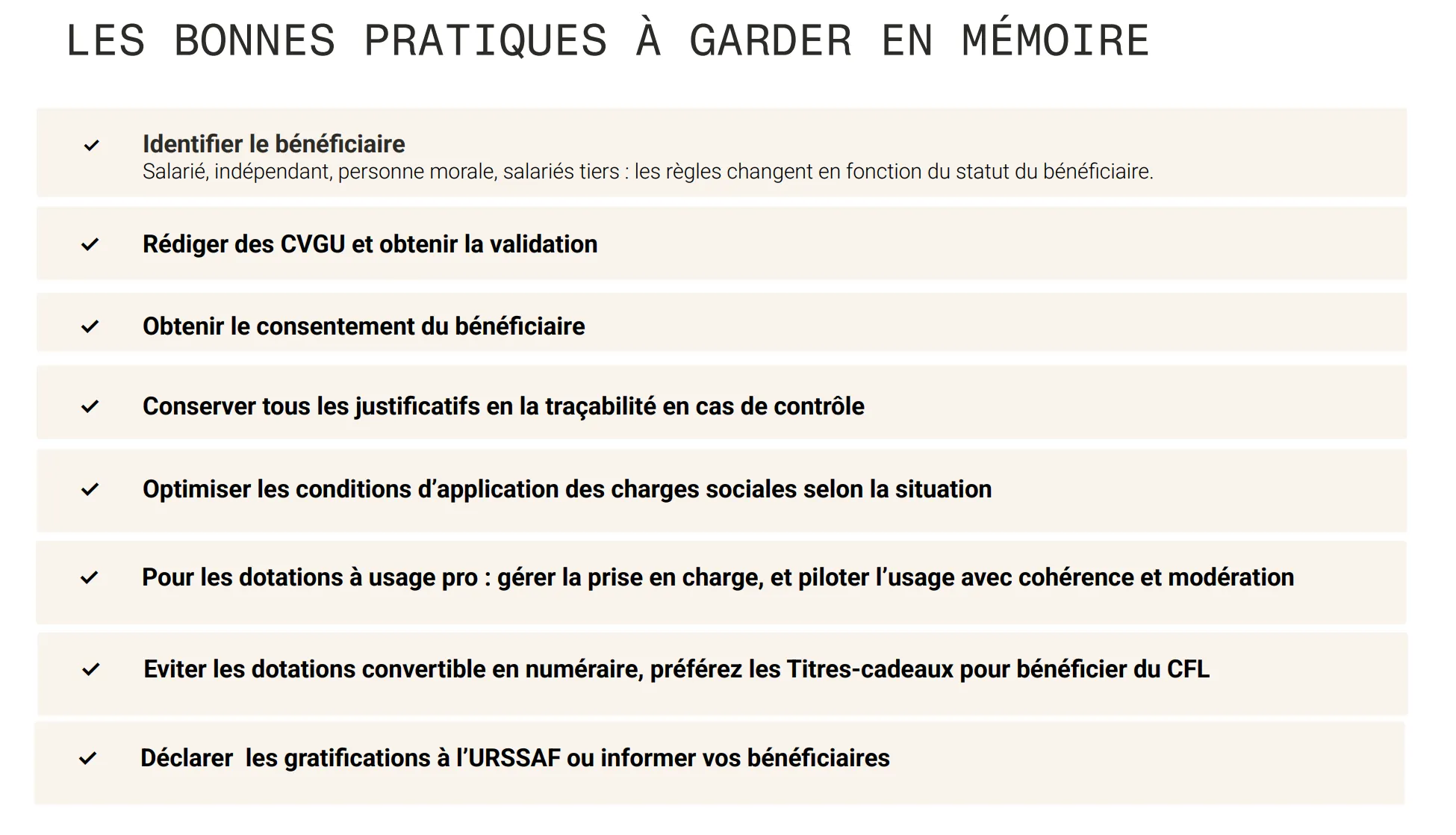
Regulation is not a barrier; it is an operational framework. And in 2026, this framework becomes a key differentiator: it separates opportunistic programs from truly strategic initiatives.
This is precisely the approach we champion at RewardPulse.
We support companies with:
- designing B2B loyalty programs,
- incentivizing reseller networks,
- managing internal and external sales forces,
- structuring compliant and profitable programs.
Every project begins with a strategic analysis and a model of the expected ROI, prior to any operational implementation.
If you are considering launching or evolving a program in 2026, our teams can help you structure a compliant, optimized framework aligned with your performance goals.
Prêts à booster vos ventes ?
Lorem Lipsum Pain Sits Amet, Conecteur adipiscing Elite. Suspend varius enim in eros elementum tristique. Suis cursus, mi quivera ornare, eros pain interdum nulla, tu commodo diam libero vitae erat. Aenean Faucibus nibh et justo cursus di rutrum lorem imperdiet. Nunc ut sem vitae rissus sad powder.
request a demo%20(10).png)
.webp)